Nicole Fernandez considers herself a global citizen. True; she’s an American born in a middle-eastern country, to parents who are both of Indian origin and speaks four languages.
“I consider myself a global citizen. Part of this is due to my background and upbringing, and part of this is due to my worldviews.” said Fernandez. “I currently serve as an AmeriCorps member in Knoxville, Tennessee. The AmeriCorps program is a national service program that matches individuals to different service areas around the country. We do anything from serve with Habitat for Humanity, to serving at shelters, to disaster relief efforts, to volunteer management.”
“I think in order to be a global citizen one should think about their impact. It’s not just about what your citizenship status is or which countries you’ve visited, it’s more about you evaluating your impact on the world,” said Fernandez.
The program head of Family and Community Social Services at Guelph-Humber and director of Soka Education Research Initiative on Global Citizenship, Dr. Paul Sherman, defines global citizenship as how one thinks about their place in the world and how we think about other people in the world.
“It has to do with empathy towards others, especially people we don’t know, it could be the people around the world that are suffering,” said Sherman. “It’s an understanding that we’re all interconnected as human beings, we’re connected with our environment, connected with animals and knowing that there’s a connection there. And if there is an understanding that we’re all connected, then there’s a perspective of how we should treat each other because we’re connected.”
“If I told you show me that you’re a Canadian citizen you would show me your birth certificate or passport, but if I said to you show me that you’re a global citizen you would have to tell me how you think about life and other people and what you do to make the world a better place,” said Sherman. “It’s a never ending process, you could talk about being a global citizenship all you want, but to me it’s in the action.”
Sherman defines a global citizen as, knowing your place in this world and feeling connected to humans all over the globe. “Global citizenship is really a perspective of how we view ourselves in the world. Taking care of our environment, advocating for social justice for human rights that’s what global citizenship is,” said Sherman.
Global citizenship can mean many different things. When some people were asked if they considered themselves as a global citizen, they were unsure of what the question was asking and had different takes on it. Before you ask yourself if you are a global citizen, it is important to understand what this term really means.
Sherman compares global citizenship to the feminist movement. “When the feminist movement first came out in the 80’s, not many knew about it, but now it’s a huge deal that almost everyone is aware of,” said Sherman. “Global citizenship will eventually become a big deal, right now a lot of people don’t know what it is. Give it a few years and it will be just as known as the feminist movement.”
Sandy Yousif, 21, is Freedom by Design’s director of the American Institute of Architecture Students at Lawrence Technological University in Detroit. The organization helps build accessible homes for those with disabilities and renovates homes for the less fortunate.
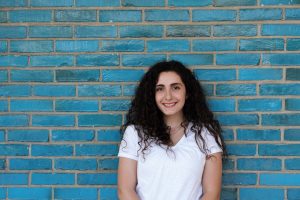
“I consider myself a global citizen because my position at Freedom by Design allows me to work with students outside the country,” said Yousif. “One of the projects that we collaborated with in the past was a project where my team and I had the opportunity to rebuild a community in South Africa.
That was us putting a step forward in helping other people outside of our own country. Having the experience of helping others offers me with a whole new perspective on global citizenship.”
As Yousif said, it is about belonging to a world community and not isolating yourself. In today’s world it’s easy and doesn’t take as much effort to become aware of what is going on in the world as information is right at your fingertips. Climate change is an ongoing issue in the world and news outlets tend to mention recent research on the topic from time to time. As a global citizen who cares about this issue, the next step would be to take action in creating a more sustainable environment.
“Yes I do consider myself as a global citizen because I care about about what goes on around me in the world rather than what is going on in my personal life,” said Brenda Nonah, a Humber College alumna. “When I became vegan, I asked myself how will this make a positive impact on the world. In fact, my biggest discussion to turn vegan was something that I wanted to do because I knew it would make a positive impact globally. I thought about the environmental impacts before I thought of how it would impact myself nutritionally.”
Sherman explains that there’s a lot of research that shows that you identify with global citizenship largely as a result of what’s called your normative environment. “Which means how you grew up, or where you go to school. So if significant people in your lives are more globally aware, it’s more likely that people who are exposed to those issues then start identifying as global citizens,” said Sherman.
As a result, the environment we grow up in has an affect on how our thoughts are orientated towards global citizenship. If a tsunami were to happen on the other side of the world, a person who identifies as a global citizen would want to take action so that they can help those during the catastrophe.