University students aren’t getting enough sleep. And the sleep they are getting isn’t great. Here’s what we know, and what you should to fix your sleep.
[infogram id=”sleep-story-1hnq41ql575x63z”]
We surveyed over 100 post-secondary students. An astonishing ninety-one per cent of them said they were experiencing signs of sleep deprivation. Symptoms like tiredness during the day, difficulty falling asleep, and waking up often at night were the most popular among these young adults.
According to Dr. Brian Murray, a Neurologist specializing in sleep medicine, lack of sleep can cause weight gain, decreased mood, and even more long-term effects like decreased immune function.
One student in particular said she was experiencing more severe symptoms. Vanessa Didomenico has sleep apnea. We wanted to help her and her peers so we created seven easy steps they -and you- can take to get a better sleep.

Help improve your sleep by changing your routine during the day. Dr. Amber Merrick, a licensed Naturopath, explained that our ability to feel awake is affected by the circadian rhythm. Dr. Merrick said this is your body’s internal clock and it can be influenced by factors such as light. She suggests exposing your eyes to natural light within 20 minutes of waking up. This can be anything from physically going outside to simply opening your blinds first thing in the morning.
Another daytime activity that can affect your sleep is exercise. While exercise and a healthy lifestyle can help with sleep problems Dr. Murray said it’s best to exercise between morning and mid afternoon to avoid heavy stimulation before bed.

Health is not always a student’s first priority. They must balance school, work and an active social life as well as their health, explained Didomenico. She describes her sleep routine as, “a constant battle, a war even!”
Stress is a common factor that can prevent many students from getting a good night’s rest. Dr. Murray said that school stress, social pressures and the fear of missing out on group activities can prevent students from getting a full 8.5 hours rest. He suggested spending time each day doing something to relax. This could be mindfulness, meditation, deep breathing exercises, or simply doing a soothing activity you enjoy.


Sleep hygiene is an important part of any bedtime routine. This means keeping your sleeping space clean and preparing it for night-time. Dr. Merrick suggested keeping your room as dark as possible by using blackout blinds and keeping the bedroom door closed.
If you’re having a hard time falling asleep, try using a white noise machine or a fan to help block out unwanted distractions.
Finally, minimize fluorescent (blue) lights such as phones, LED lights or alarm clocks a few hours before bedtime. This type of light mimics natural sunlight, disturbing your circadian rhythm and tricking your brain into being awake. Try using blue lights first thing in the morning instead.

Yoga is a great way to help you wind down before bed and make you feel tired. Poses such as cobbler, shoulder stand, and sleep salutation are great ways to prepare your body for sleep. They can be done on the floor, on a yoga mat or even in your bed. Try adding the following yoga poses to your bedtime routine:
Eyerolls:
Eyeballs up and down three times


Eyeballs left to right three times


Eyeballs in circular motion, clockwise and counterclockwise, three times each

Rest for one breath with your eyes closed between each series 
Move your eyeballs just as much as you comfortably can
Cobbler’s pose:
Bring your soles together
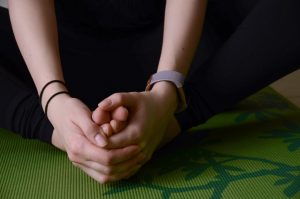
Spread your knees to the sides and let them fall onto the mat
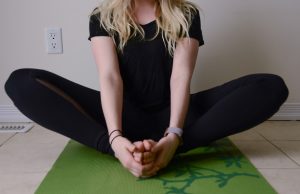
Hold on to your feet and keep a comfortably straight spine
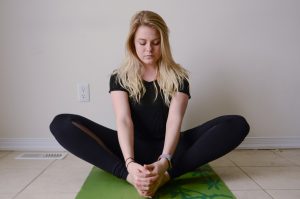
Sleep salutation:
Lie flat on your back; palms facing up
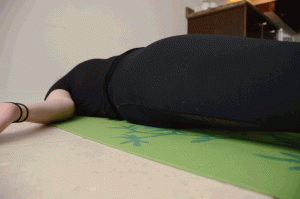
Scrunch and release your face muscles

Lift your arms slightly, squeeze them tightly, clench your hands, and release
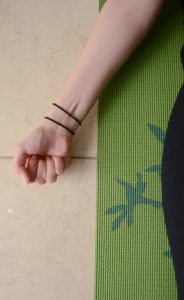
Tense and release legs muscles

Tension relief:
Imagine each individual body part melting into the mat

Do this with your head, shoulders, arms, chest, torso, abdomen, hips, legs and feet


Your blood sugar levels is another factor that can affect your circadian rhythm. If you find yourself waking up throughout the night, try having a small snack before bed. Dr. Merrick suggests having something light and healthy to help stabilize your blood sugar. She said to avoid things like caffeine, dairy or alcohol too close to bedtime. Something like fruit and almond butter is always a tasty option.
Eating before bed has different effects on everyone. Didomenico for example has to avoid eating a few hours before she goes to sleep. This is because her sleep apnea causes her to choke and having food in her system could be dangerous.
If eating before bed isn’t a good option for you, see if taking natural supplements work instead. Melatonin is a hormone in your body that helps regulate your sleep cycle. Melatonin supplements can be found at your local grocery or health food store in either pill or liquid form.
Finally, always check with your healthcare provider first to make sure these options are right for you.


Your computer, TV and phone screens are bright fluorescent lights that can interfere with your circadian rhythm and signal to your brain that it’s time to be awake. According to both our experts, being strict about regulating your screen time one to two hours before bed can help you avoid this added distraction. Instead, relax before bed by doing yoga, breathing exercises, listening to relaxing music or reading a book.

Get yourself into a regular bedtime routine. This involves going to bed and waking up at the same time each night. This isn’t always easy for students, but try your best and plan ahead to keep your sleep schedule regular.
Because students typically have a high level of stress, it is important for them to monitor their sleep health. “And that’s going be something they’ll have to work on throughout all of their waking hours,” said Dr. Merrick
By using these seven steps to improve your sleeping habits, you can increase your overall health and ultimately become a more productive student.


Taking naps to compensate for lost sleep isn’t perfect but it is better than being sleep deprived. Dr. Richard Horner, professor of medicine and physiology at the University of Toronto, said the ideal time to nap is in the early afternoon between 1 p.m. to 4 p.m.
Dr. Horner said, naps should only be around 20 minutes long. He said, “the [later or] longer the nap, the more impact they can have during the night.”
According to Dr. Horner, you should focus on optimizing better sleep during the night as opposed to taking more than one nap on a daily basis. He said, “people should not feel fatigued during the day.” If they feel fatigued throughout the day, then their sleep during the night is not optimal. Dr. Horner said feeling fatigued throughout the day is frequent amongst university students.
Although naps can be beneficial, according to Dr. Horner they can also be a sign of sleep problems. He said frequent naps throughout the day can be pervasive. Insufficient sleep is one of the causes of the need to nap more than once in a day.
However, Dr. Horner said feeling tired some days is normal. He said, napping for 20 to 30 minutes in the afternoon can help you feel refreshed and capable of taking on the rest of your day!